Let’s be honest. “Productivity” has gotten a bad rap. It’s become synonymous with grinding, hustle porn, and squeezing every last drop of efficiency from your day until you’re a dried-out husk. That’s not productivity; that’s exhaustion with a fancy to-do list.
True, sustainable productivity isn’t about doing more. It’s about doing what matters, with less stress and more space. It’s designing a lifestyle where your energy, focus, and time are aligned with your deepest goals, so you can accomplish meaningful work and still have a life you enjoy. This isn’t a hack. It’s an architecture. Let’s build your blueprint for a lifestyle that produces results without consuming your soul.
The Productivity Paradigm Shift: From Output to Rhythm
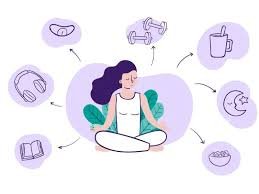
Forget the old model of productivity as a straight line of endless tasks. Think of it instead as a seasonal, rhythmic dance between focused effort and intentional recovery. A farmer doesn’t harvest year-round; they plant, tend, harvest, and let the field lie fallow. Your brain and body require the same cycle.
A productive lifestyle isn’t a sprint you endure; it’s a sustainable pace you can maintain. It’s built on systems, not sheer willpower. Let’s design yours.
Pillar 1: Energy Management (Your Foundational Fuel)
You cannot manage time if you are bankrupt of energy. Productivity is an energy game first, a time game second.
1. Identify Your Biological Prime Time (BPT)
- The Practice: For one week, track your energy, focus, and mood every two hours. When do you feel sharp, creative, and motivated? When do you feel foggy and sluggish?
- The Application: Guard your BPT—that 2-4 hour window of peak mental clarity— for your most intellectually demanding, creative, or strategic work (your “Deep Work”). Never waste it on email, meetings, or admin. Schedule low-energy tasks (filing, clearing inbox, routine calls) for your natural dips.
2. The Non-Negotiable Recovery Rituals
Productivity is not the absence of rest; it is made possible by it.
- The Daily “Shutdown”: A 5-minute ritual to end your workday. Tidy your space, review accomplishments, write tomorrow’s 3 top priorities. This closes cognitive loops, preventing work thoughts from hijacking your evening.
- The Weekly “Digital Sabbath”: One 24-hour period (e.g., Saturday) with zero work-related digital input. No email, no Slack, no “just checking.” This full system reboot prevents burnout and sparks creativity.
- The Quarterly “Mini-Retreat”: One day every 3 months to step completely away. Review your goals, assess your systems, dream about the next quarter. This is strategic recalibration.
Pillar 2: Focus Architecture (Building Concentration Sanctuaries)
In an age of infinite distraction, the ability to focus is a superpower. You must architect your environment and habits to defend it.
3. The “Monotasking” Mandate
- The Practice: Single-tasking is the only real tasking. Use the “Pomodoro Technique” or simply block 60-90 minute “Focus Sprints” in your calendar.
- The Rules: During a sprint: Turn off all notifications. Close every browser tab and app not essential to the one task. Use a physical notepad for stray thoughts. If you work in an open office, noise-cancelling headphones are not an accessory; they are a productivity tool.
4. The “Distraction Inventory”
- The Practice: For two days, jot down every single thing that breaks your focus—a phone buzz, a colleague’s question, a sudden urge to Google something.
- The Application: Systematically eliminate or batch these triggers. Put your phone in another room. Use a “Do Not Disturb” sign or status. Schedule “office hours” for colleague questions. Keep a “parking lot” notepad for random thoughts. You are the curator of your attention environment.
Pillar 3: Intentional Action (Doing What Actually Moves the Needle)
Busyness is not productivity. You must ruthlessly separate the urgent from the important.
5. The “MITs” – Most Important Tasks
- The Practice: Each night or first thing in the morning, define 1-3 MITs. These are the tasks that, if completed, would make the day a success. They must align with your core goals, not just be urgent.
- The Rule: These get scheduled into your Biological Prime Time. Nothing gets in their way. Everything else is secondary.
6. The “Eisenhower Matrix” Weekly Review
- The Practice: Once a week, sort all incoming tasks and projects into four boxes:
- Important & Urgent: Do these now (crises, deadlines).
- Important & Not Urgent: SCHEDULE these (planning, strategy, relationship-building, learning). This is your productivity goldmine.
- Not Important & Urgent: DELEGATE or automate these (some emails, some meetings).
- Not Important & Not Urgent: DELETE these (mindless browsing, trivial tasks).
- The Power: This ensures you spend your life on Quadrant 2—the activities that prevent crises and create real growth.
Pillar 4: Systematization (Automating the Mundane)
Your willpower is for creative work, not for deciding what to have for lunch or where a document lives.
7. Create “Habit Stacks” & Routines
- The Practice: Chain new, desired habits to existing ones. “After I pour my morning coffee, I will write my 3 MITs for the day.” “After I finish lunch, I will process my email inbox for 20 minutes.”
- The Result: Decision fatigue evaporates. Positive actions become automatic, preserving mental energy for important thinking.
8. Design a “Closed-Loop” Organizational System
- The Practice: Implement a trusted, simple system to capture, clarify, organize, and review everything—from work projects to holiday gift ideas. (David Allen’s Getting Things Done is the classic framework).
- The Goal: Get every “open loop” (anything pulling at your attention) out of your head and into a trusted system you review weekly. This creates mental clarity and ensures nothing falls through the cracks.
The Keystone: The Weekly & Quarterly “Command Center” Review
Your system needs a pilot. This is non-negotiable maintenance.
- The Weekly Review (60 minutes): Process all notes, review your systems, update your task lists, reflect on wins/learnings, and plan the next week’s MITs and schedule. This is your cockpit reset.
- The Quarterly Review (2-3 hours): Look back 90 days. What did you accomplish? What fell flat? Are your daily actions aligned with your annual goals? Adjust your focus and projects for the next quarter. This is your strategic realignment.
Conclusion: Productivity as a Form of Self-Respect
Creating a productive lifestyle is not about commodifying your every hour. It is the ultimate act of self-respect. It is saying, “My time, my energy, and my focus are precious, and I will design my life to honor that.”
It means you do deep work when you are sharp, so you can be fully present with loved ones when you’re not. It means you systemize the trivial, so you can engage with the profound. It means you build in recovery, so your efforts are sustainable for decades, not just weeks.
Start small. Identify your Biological Prime Time this week. Defend it for one important task. Build one habit stack. The goal is not a perfectly optimized life robot, but a human life lived with purpose, presence, and peace. That is the ultimate productivity.
FAQs
1. This feels rigid. What about spontaneity and creativity?
The structure is the foundation for spontaneity. Just as a jazz musician needs to know the scales (structure) to improvise (spontaneity), you need a reliable system to handle the mundane. This frees your mind from clutter and creates the mental space and time where true creativity and spontaneous joy can actually occur. The system serves you; you don’t serve the system.
2. I have an unpredictable job (e.g., healthcare, emergency services). How can I schedule my BPT?
For unpredictable roles, think in “Flexible Anchors.” You may not have the same BPT window daily, but you know you have certain rhythms (e.g., a slightly quieter period mid-morning). Protect that as a “flex anchor” for your most important non-urgent work. Your weekly review becomes even more critical to ensure your important tasks get slotted into whatever anchors appear. Your system needs to be more fluid, not absent.
3. How do I deal with the guilt of taking a full Digital Sabbath or not being “always on”?
Reframe it as professionalism, not laziness. The most respected professionals set boundaries to protect their ability to do their best work. Being “always on” leads to burnout and lower-quality output. Communicate your boundaries clearly: “I do a digital disconnect on Saturdays to recharge for the week ahead. I’ll respond first thing Monday.” Model the sustainable behavior you wish to see.
4. What’s the one tool I absolutely need?
A trusted, singular capture tool and a calendar. That’s it. The tool can be a simple notepad, a notes app on your phone, or a sophisticated task app. The key is that everything goes into it immediately, so your brain trusts it’s been captured and can let it go. Your calendar is for when things will happen. Master these two before anything else.
5. I’ve tried systems before and I fall off. How do I make this stick?
Start with one pillar for one month. Don’t implement all four at once. Month 1: Focus entirely on Energy Management—find your BPT and implement the shutdown ritual. Once that feels automatic, add Focus Architecture in Month 2. Systems fail when we try to change everything at once. Slow, layered mastery wins the race. Forgive yourself when you slip, and just resume the next day. Consistency over perfection.